

Desiccants for export and shipping containers
A sealed container is a condensation chamber: the warm, humid air loaded during stuffing cools at night and at every change of latitude, condenses on the steel roof and drips onto the cargo. This is container rain, and it arrives at destination as mould, corrosion, collapsed cartons and rejected loads.
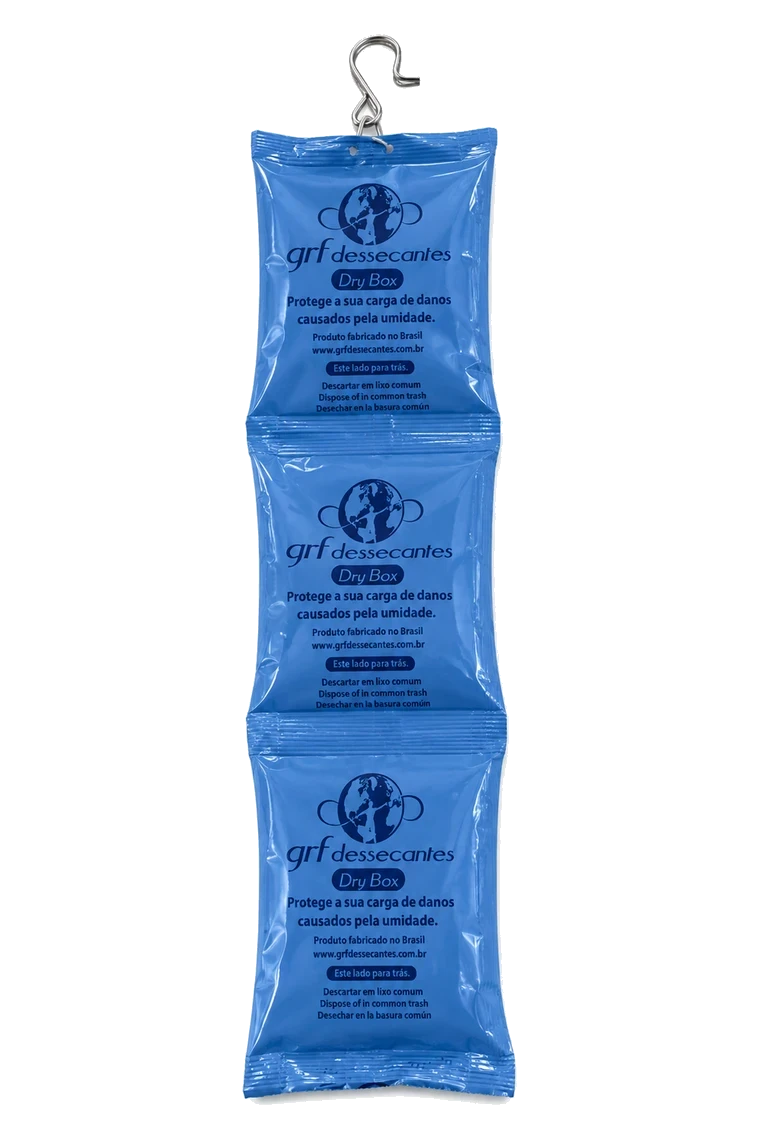
GRF manufactures in Brazil the calcium chloride desiccant that prevents it: Dry Box, and the double-pouch version Double Shield, hung on the container walls at the moment of stuffing.
The problem
Container rain happens inside your container
The air that enters the container during stuffing carries water vapour — from the weather that day, from the container’s wooden floor and from the cargo itself, especially hygroscopic products, timber, paper or food. That air stays sealed in for weeks.
In transit, the container heats in the sun and cools at night, and the thermal cycle repeats every day of the voyage. When the wall temperature falls below the dew point of the internal air, vapour condenses on the steel roof and sides, runs down and drips onto the cargo.
The damage is always the same: mould on cardboard packaging, corrosion on metal parts, labels peeling off, softened cartons that no longer stack, and cargo rejected at the importer’s inspection — with the insurance argument that follows.
What GRF delivers
A desiccant built for the container
Absorption by deliquescence
Calcium chloride captures water vapour and dissolves in the water it absorbs. The gelling agent holds that solution as a gel inside the sachet.
Up to 300% absorption
Capacity far above adsorption desiccants, which have a finite number of sites and a limit intrinsic to the material.
Hook or adhesive strip
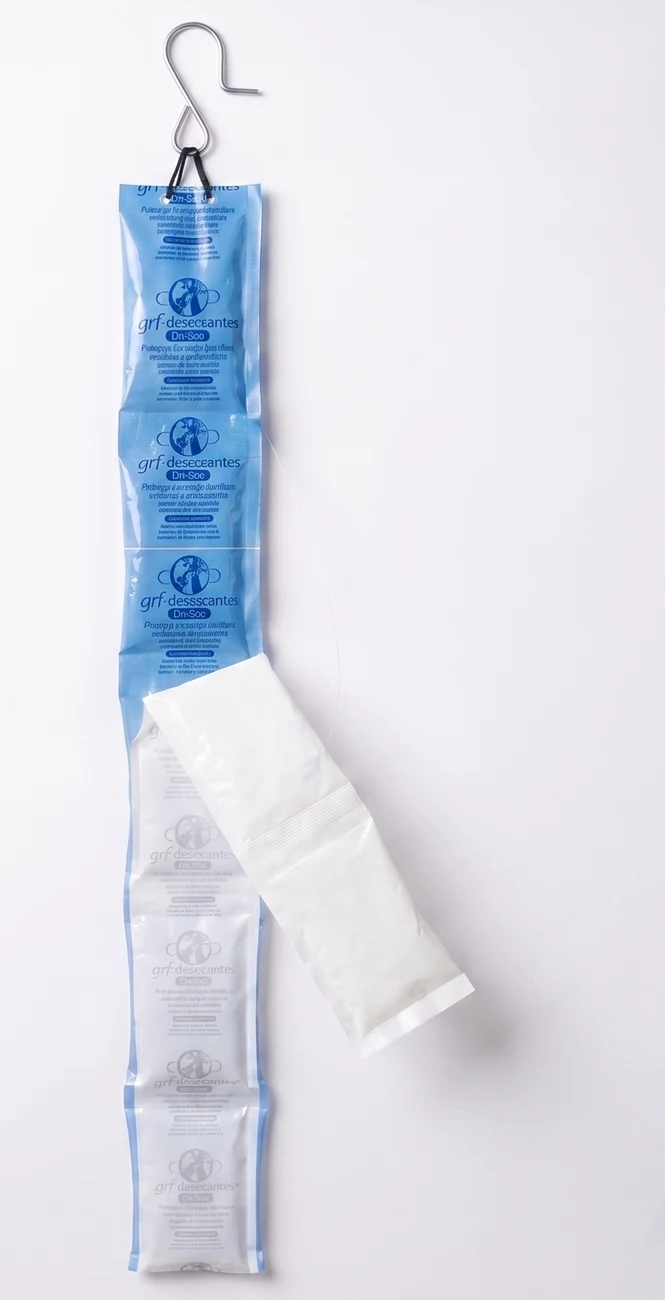
Strips of 3 or 6 sachets. Hang or stick them on the container wall, with no tools and no extra stuffing time.
Double-pouch version
In Double Shield the desiccant sachet sits inside a second nonwoven sachet: two walls between the gel and the cargo.
Free calculation
Quantity and placement are calculated from the route, the transit time and the type of cargo.
Made in Brazil
Own production in Sorocaba: domestic manufacturer lead times and no import cost.
In practice
How many sachets your container needs
There is no universal number. The quantity depends on the container’s air volume, the humidity of the route, the transit time, the cargo and the moisture the cargo itself brings. A 20-foot of coffee leaving Santos for Rotterdam is not the same case as a 40-foot of auto parts to Chile.
GRF runs that calculation free of charge. Send us the route, the transit time and the type of cargo, and you receive the quantity, the placement on the walls and the inspection point in writing.
Application happens during stuffing, with the strips hung by their hook high on the walls before the doors are closed — or stuck in place, in the adhesive version.
Where it is used
Cargo that suffers most from container moisture
Any cargo travelling for weeks in a sealed container is exposed. The most sensitive:
- Coffee, grain and agricultural commodities
- Sugar, flour and dry foods
- Leather, footwear and textiles
- Timber, furniture and plywood
- Paper, board and packaging
- Metal parts and auto components
- Machinery and industrial equipment
- Electronics and home appliances
- Hygroscopic chemicals
- Tobacco, nuts and dehydrated goods
Products
What GRF supplies for the container
Container desiccant
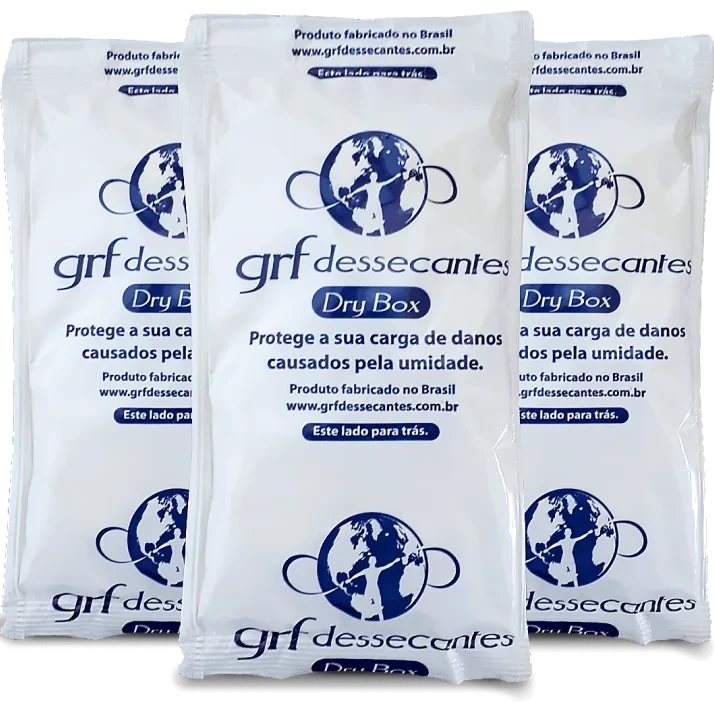
Dry Box
The calcium chloride desiccant for container walls, in strips of 3 or 6 sachets, with hook or adhesive.
View the product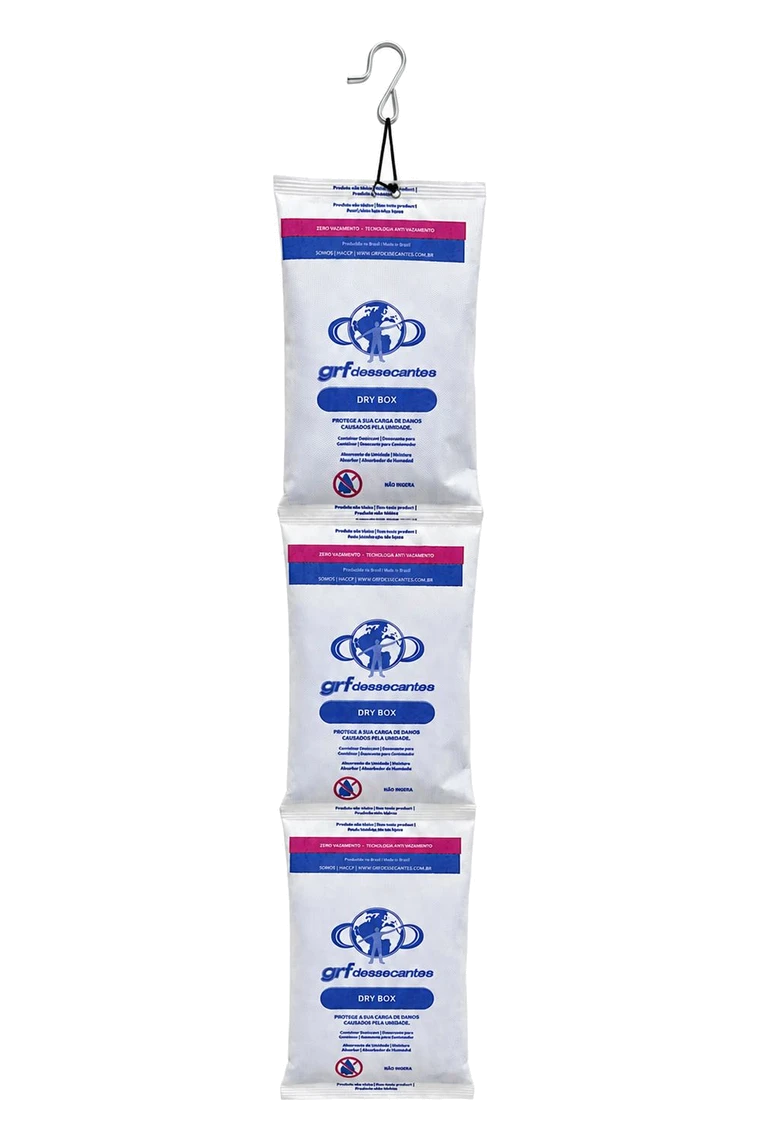
Double protection
Double Shield
The same desiccant in a double pouch: the sachet sits inside a second nonwoven sachet.
View the product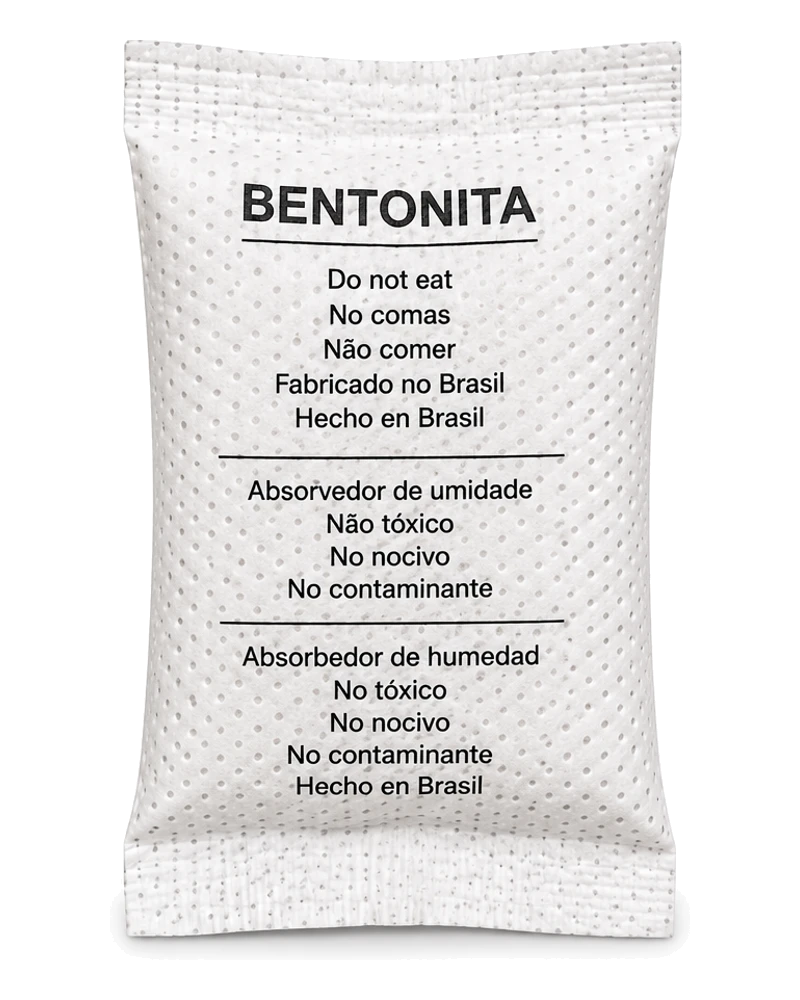
Desiccant for boxes and packaging
Dry Pack
Bentonite from 0.5 g to 1 kg to protect each carton from the inside, next to the product.
View the productFAQ
Frequently asked questions about container desiccants
What is container rain?
It is the condensation that forms on the steel roof and walls of a container when the temperature drops below the dew point of the internal air. The water runs down and drips onto the cargo, causing mould, corrosion and collapsed packaging. The cycle repeats every day of the voyage.
How many Dry Box sachets do I need?
It depends on the container’s air volume, the humidity of the route, the transit time and the type of cargo. GRF runs the calculation free of charge: send those details and you receive the quantity, the placement and the inspection point in writing.
Hook or adhesive — which one?
The hook is the standard for containers with lashing bars or fixing points high on the wall. The adhesive version covers cases where there is nothing to hang from, or where the operation prefers not to use the structure. Both carry the same desiccant.
What is the difference between Dry Box and Double Shield?
The desiccant is the same: calcium chloride with a gelling agent. The difference is the packaging. In Double Shield the sachet sits inside a second nonwoven sachet that acts as an outer containment layer — two walls between the gel and the cargo.
Does it work for imports and coastal shipping too?
Yes. The mechanism is the same on any leg where the container stays closed through temperature swings: export, import and coastal shipping.