

Desiccants for the automotive industry
A machined, stamped or treated part reaches the customer with the surface it left the plant with — or with a spot of oxidation that turns the batch into a return. Between production and the customer’s assembly line, the enemy is the moisture travelling along inside the package.
GRF manufactures in Brazil the desiccants for all three layers of that operation: inside the part’s package, inside the shipping carton and inside the export container.
The problem
Oxidation starts in the package, not on the shelf
A metal part comes off the process warm and is packed while still carrying residual heat. The air trapped in the package cools, moisture condenses on the surface and forms a film of water over the steel — enough to start corrosion before the carton even leaves the plant.
In transport and in storage the cycle repeats. Every temperature swing pushes the internal air closer to its dew point, and the effect accumulates over weeks of transit, especially in ocean exports and in warehouses without climate control.
The cost shows up far from the origin: parts rejected at incoming inspection, aftermarket batches with rust spots on the counter, rubber or fabric components with mould, and electronic connectors with oxidised contacts.
What GRF delivers
Protection across all three packaging layers
Dry Pack from 0.5 g to 1 kg
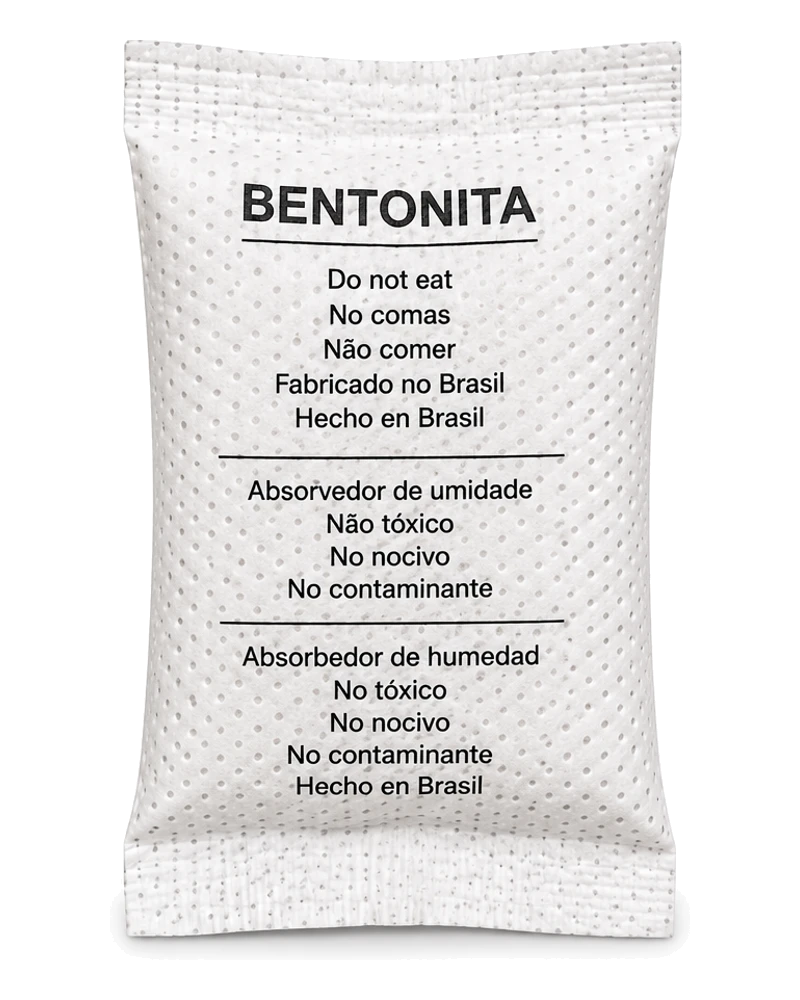
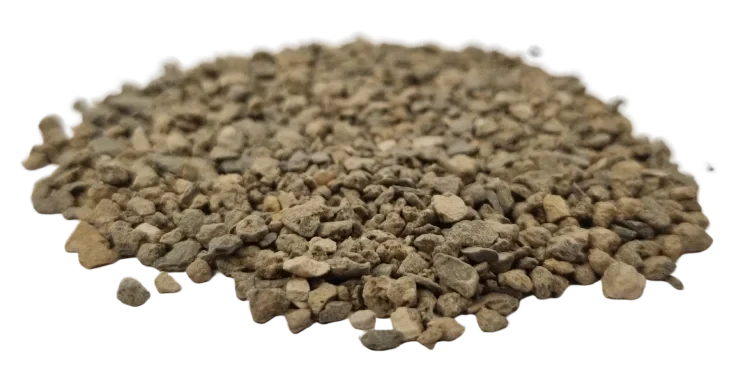
Bentonite sachets in nonwoven for the part’s package and for the carton, in sizes matched to each item’s volume.
Direct contact with the part
Bentonite has a neutral, chemically inert formulation, suitable to sit inside the package next to the product.
Silica gel from 0.5 g
For small components, connectors, sensors and electronic modules, where the sachet must be small and must not generate liquid.
Dry Box for the container
Calcium chloride on the walls, for ocean exports of auto parts and CKD kits without container rain.
Custom fill weight
Sizes and fill weights matched to the headspace volume, the barrier material and the transit time.
Made in Brazil
Production in Sorocaba, with domestic manufacturer lead times and no import cost.
How to choose
Which desiccant for each layer
| The part’s package | Dry Pack bentonite in a nonwoven sachet, sized to the package volume. For small and electronic components, silica gel from 0.5 g. |
|---|---|
| Carton and shipping unit | Dry Pack in larger fill weights, up to 1 kg, according to the carton’s air volume and the storage time. |
| Export container | Dry Box calcium chloride, in strips with hook or adhesive on the walls. Double Shield when the operation calls for a double pouch. |
| Sizing | Fill weight is defined by the free headspace volume, the barrier material, the humidity of the route and the transit or storage time. |
Where it is used
Typical applications in the automotive industry
The desiccant travels with the part from dispatch to the customer’s assembly line:
- Machined and stamped parts
- Bearings and precision components
- Aftermarket and service kits
- CKD kits for export
- Brakes, clutches and discs
- Sensors and electronic modules
- Wiring harnesses and connectors
- Rubber and sealing components
- Surface-treated parts
- Tooling and line fixtures
Products
What GRF supplies to this industry
Desiccant for boxes and packaging
Dry Pack
Bentonite sachets from 0.5 g to 1 kg for the part’s package and the shipping carton.
View the product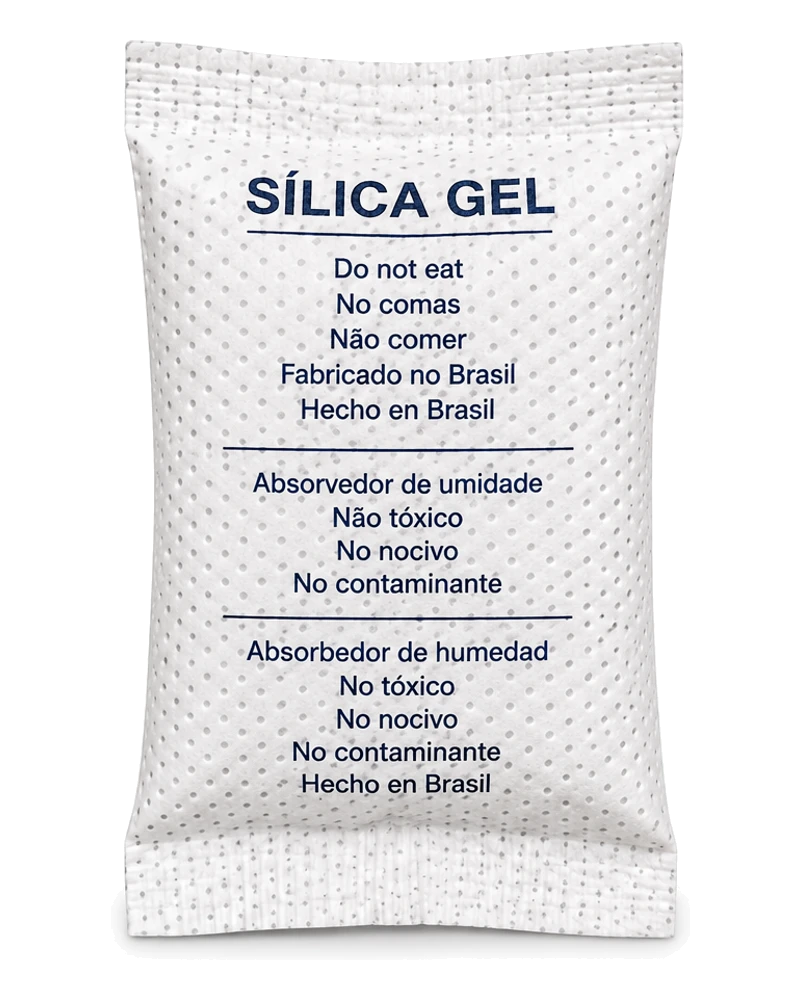
Sachets from 0.5 g
Silica Gel
Sachets from 0.5 g for small components, sensors, connectors and electronic modules.
View the product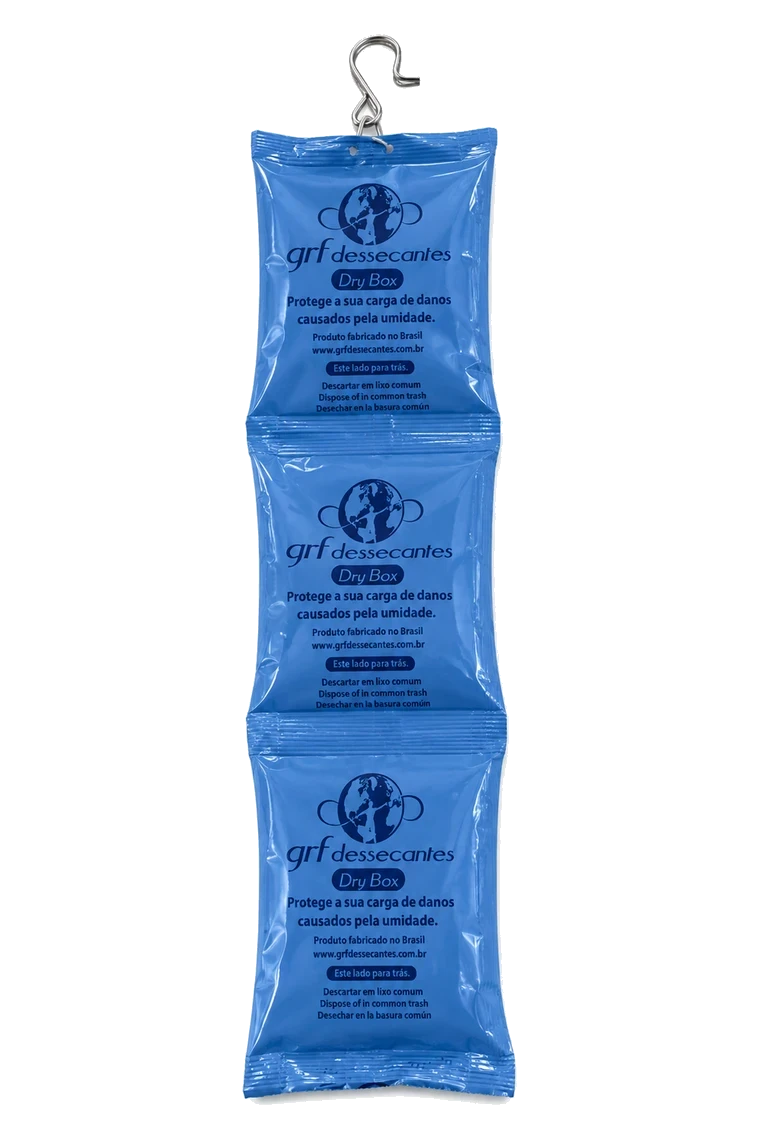
Container desiccant
Dry Box
Calcium chloride on the container walls, for exports of auto parts and CKD kits.
View the productFAQ
Frequently asked questions about desiccants for auto parts
Which desiccant should I use for metal parts?
For the part’s package, Dry Pack bentonite clay in sachets from 0.5 g to 1 kg, with a neutral, inert formulation suitable for direct contact. For small and electronic components, silica gel from 0.5 g. For the export container, Dry Box calcium chloride on the walls.
Can the sachet be in direct contact with the part?
Yes. Dry Pack bentonite is neutral and chemically inert, and silica gel is non-toxic, odourless and non-corrosive. Both are suitable for use inside the package, next to the product.
Does it work for CKD exports in containers?
Yes, and the two layers are complementary. Dry Pack or silica gel protect each part inside its own package; Dry Box protects the air of the whole container, hung on the walls. The Dry Box quantity is calculated from the route and the transit time.
How is the used desiccant disposed of?
Dry Pack bentonite is non-toxic and can be disposed of as ordinary waste, since it does not generate hazardous residue. For the other products, disposal guidance is stated in the technical data sheet, sent on request.